
Original photograph by: Max Wilbert. Sorry to those cadres who aren't featured in the drawing.
Also: Myself and the other DGR Cadres are featured in a show on Radio Against Global Ecocide. Click here to listen.
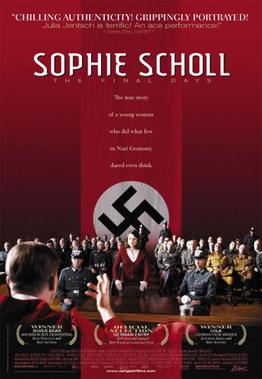 Sophie Scholl, her brother Hans, and the anti-Nazi resistance group the White Rose Society, is an example we all should look to in resisting the unjust and murderous culture in power. After watching the film based on their story, Sophie Scholl: The Final Days, my heart is broken at their sacrifice and inspired by their courage to act.
 Lakota Woman, both a book and film, is an amazing autobiography of Mary Crow Dog (now Mary Brave Bird), feminist and former member of the American Indian Movement (A.I.M.) She tells her experiences growing up on a reservation and being forced to attend a boarding school. Her rejection of assimilation into white culture leads her into the revolutionary A.I.M., with whom she stages an occupation at Wounded Knee in the early 1970's. At the same time of her radicalization, she also rekindles participation in sacred Lakota spiritual traditions. This story is filled with history and the personal narrative paints the picture of a brave and inspiring human being fighting for a better world. Favorite quote:
 The Color Purple is a novel by Alice Walker that speaks to sisterhood and struggle of African-American women in the southern U.S. only shortly after slavery was formally abolished. This classic story follows Celie as she learns to appreciate her body, speak up and fight back against abusive and controlling men, and struggle for her humanity and self-determination. Favorite quotes:
I loves Harpo, she say, God knows I do. But I'll kill him dead before I let him beat me. Now if you want a dead son-in-law you just keep on advising him like you doing. She put her hand on her hip. I used to hunt game with a bow and arrow, she say.
She say, My first step from the old white man was trees. Then air. Then birds. Then other people. But one day when I was sitting quiet and feeling like a motherless child, which I was, it come to me: that feeling of being part of everything, not separate at all. I knew that if I cut a tree, my arm would bleed. And I laughed and I cried and I run all around the house. I knew just what it was. In fact, when it happen, you can't miss it.
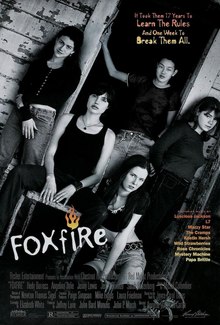 Foxfire is a film, based on a book by Joyce Carol Oates, about a group of girls in high school who meet in unity to stop a male teacher from sexually abusing them and others. After physically confronting him, the loyalty they feel to each other grows as does their embracing of sisterhood and the will to fight back. I absolutely loved the uncompromising attitudes against men's abuse of women in this film. It did have it's drawbacks, though, in that like many "mainstream films", there was unnecessary sexualization of female characters. A favorite quote:
If you ever put your hands on me again, I'm gonna snip your little nuts off with my toenail clippers!

As I understand it, the argument went that political correctness, or “P.C.,” was apparently a plot by some do-gooders to censor everyone else and prevent them from saying and doing what they want (for example using infamously common hate speech against women and people of color). The battle they claimed to be fighting was one of retaining the “freedom” to “shock” people, because, in the end, the ultimate goal is one of breaking social conventions rather than justice.
Later in my life, having been an activist and a radical for several years, I now see the whole subculture of “anti-authoritarian punk” as having been entirely entrenched in, and supportive of, the privileges that come with being a beneficiary of sadistic arrangements of power (be it white supremacy, patriarchy, or capitalist exploitation).
Historically, those in power have had to objectify others—made into “capital O” Others—before they could exploit them. When I think of the people I knew in this “anti-P.C.” camp, I am generally overcome with disdain and rage, because they are simply a new face doing the same objectification. Their effect on social justice movements is not benign, but a significant part of the problem. Oppression is effectively normalized by their brand of “freedom to” rhetoric, thus duping disenfranchised youth and others who stumble upon this sentiment to buy into the thrills of breaking boundaries instead of realizing their potential to make the world a better place and then plugging into projects and communities of righteousness.
If “P.C.” means I’m not okay with hate speech, if it means that I stand against behavior that is cruel and obviously inappropriate, then I’m fine being identified with it. But, if we want to speak honestly about the political element of reinforcing unequal dynamics, I’d much prefer the term "politically opposed”. I am politically opposed to actions and words that are oppressive, because I see it as a part of the continuum of struggle that has been the reality for many generations of people coming from traditions of feminism, anti-racism, and social justice activism.
The political element of these situations is what causes the impossibility of their harmlessness. It’s one thing to poke fun at your close friend in a way where you can both share a laugh. It’s quite a different matter for a person who is, for example, a white man, to verbally or physically assault another person who is, for example, a woman of color, despite the perpetrator claiming the guise of “freedom of expression.” The former scenario can be called “joking”, but the latter scenario can’t be called anything but oppression.
I certainly am politically opposed to oppression. Whether someone thinks I am correct or not to hold this position is of little concern to me.
Image credit: Shaun Slifer
 After finishing Margaret Atwood's A Handmaid's Tale, I feel more ready than ever for the feminist revolution. I also feel horrified.
I believe in the resistance as I believe there can be no light without shadow; or rather, no shadow unless there is also light.

Beautiful Resistance Distro: Hello, Its Ben for Beautiful Resistance Distro. I’m honored to have the chance to have a discussion with members of the music group Big Dudee Roo. To start, would you please give a brief explanation of who you are and what you do?
Max: We’re a folk-rock band from Wayland, Michigan. We write a lot of original music and play a lot of shows around Michigan. I think our music has a wide range of themes, as far as the songs that we write. Me and Nate, our banjo player, tend to focus on different environmental and social justice themes, in sort of a way that relates to people individually and emotionally. As far as the music itself goes too, we really try to focus on having a unique, original sound that is still grounded in folk and rock influences, and those genres. We pay really close attention to the songs. There’s really no virtuosic playing in the band. Everyone kind of plays their role and contributes to the song itself without stepping all over the song. You know, there’s not a lot of solos or anything. So, it’s sort of more egalitarian the way we make music.
Aurora: Yeah, I think mostly we all just love to play. You know, we just love music.
Max: And, we’re all really close friends. We all grew up in the same small town here in Southwest Michigan. So, we have a close bond with each other.
BRD: When did you start playing music together as Big Dudee Roo and what first led you to begin using your gifts as musicians as a tool for expressing your personal views on environmental, social, and political issues?
Aurora: As far as when Big Dudee Roo started playing: like we said we all went to the same high school. Everybody else in the band is a few years older than me. I’m Max’s little sister. They started playing— Max and Nate played 7th and 8th grade talent shows. And then Justin was your friend too, and so is Kurt, so they started playing together.
Max: Kurt was actually Justin’s next door neighbor. We needed a drummer and Justin was like, “I think Kurt’s a drummer”. And Kurt used to babysit Justin back in the day because they live right next to each other.
Aurora: Yeah, and then I started singing backup with them when I was about fourteen years old and I officially joined the band when I was about sixteen.
Max: And, we used to be called Big Dudee Roo and the Raptors.
Aurora: We all had nicknames; raptor nicknames.
Max: It’s such a long name that no one could remember or get it right. They’d be like, “What…did you just say?” So for practical purposes we just cut off “the Raptors”.
Aurora: Yeah, there was one venue that put up a flyer about us that said “Big Dundee Roo and the Rafters”.
Max: As far as when we started using our musical talents to support or promote different political and social causes: that was something that attracted me about music right from the beginning. When me and Nate were in 8th grade we had a pop-punk band. That’s how we got our start. I was attracted by—back then I remember there was a band called NOFX that I was into. They had some political songs, some anti-Bush songs and I thought that was so cool. So, when I first started writing songs that was something I started doing really early, trying to write protest songs. Then, over the years our political consciousness as individuals and as a band grew a lot and I personally got really into Deep Green Resistance activists and writers. I read a lot of Derrick Jensen and Lierre Keith and even spent some time over in Bellingham, Washington, working with some members of Fertile Ground, who are still really great friends today. So, it’s always been important to me, and I think it’s important to everybody in the band, to see music not just as pure entertainment, but as something that can make people think and get at their emotions. You know, on one hand music is entertainment—you want to make music that sounds good and that people are going to enjoy, that they can dance to, move to—but on the other hand it’s always been more than that for me. I remember in high school I was totally obsessed with the band Pearl Jam. It sounds funny, but I was totally attracted to how they did things like took on Ticketmaster for having a monopoly. A lot of their songs actually deal with feminist issues. There are lots of songs that concern abortion and also songs about the abuse of the culture. That was something that really attracted me. Anyways, we love—like last year when we got to play at Candlelight Collective in West Bend—that was so much fun and we had such a great night. Because a lot of times we play in bars and different places aren’t necessarily paying close attention to the words, and maybe even not the music, sometimes. So, it was great to play at a place like that where everyone was super engaged and playing attention to the words we were saying. And, we could tell the stories about the songs. That just feels so good. Those are the shows we love to play.
Aurora: The gems.

